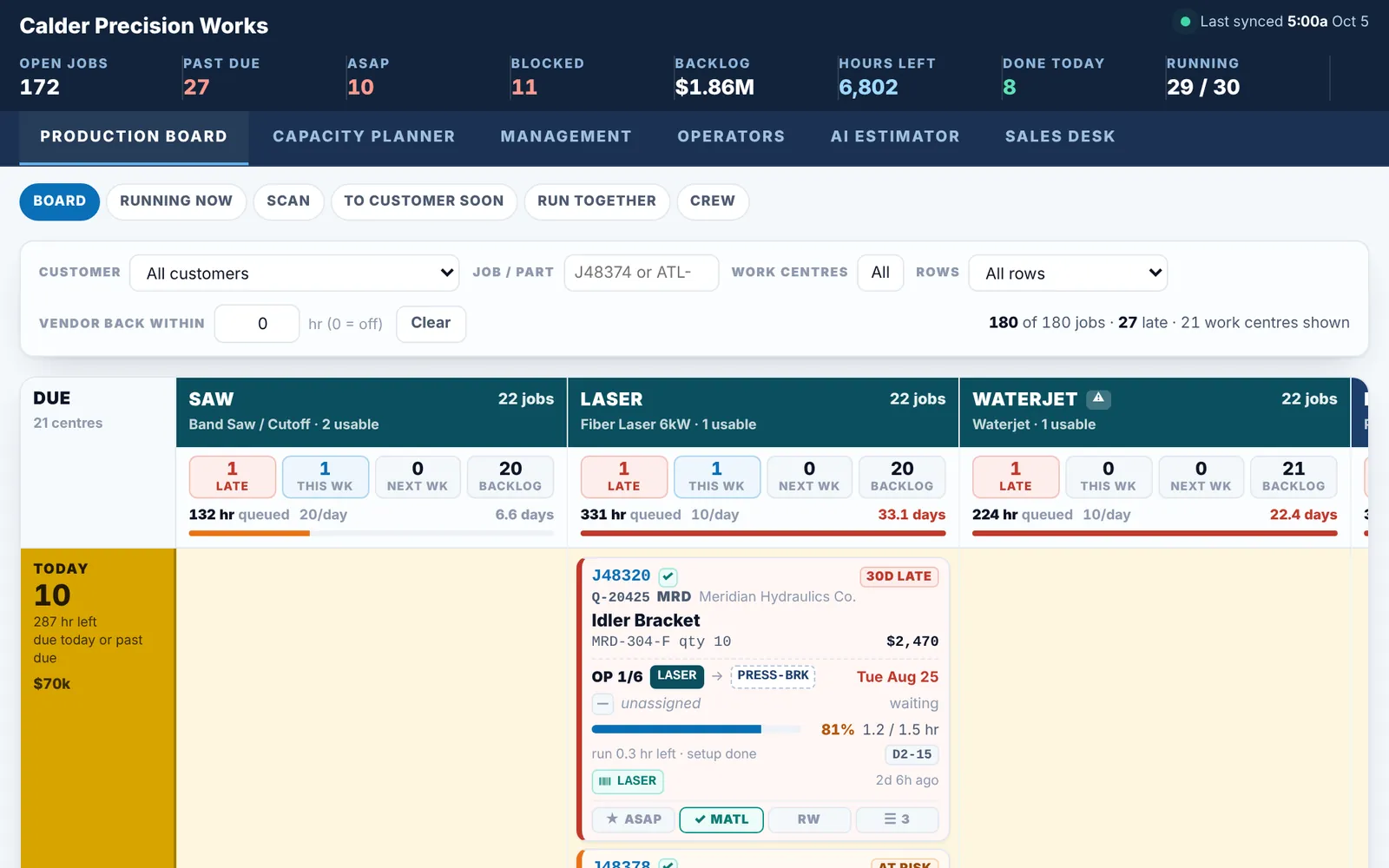
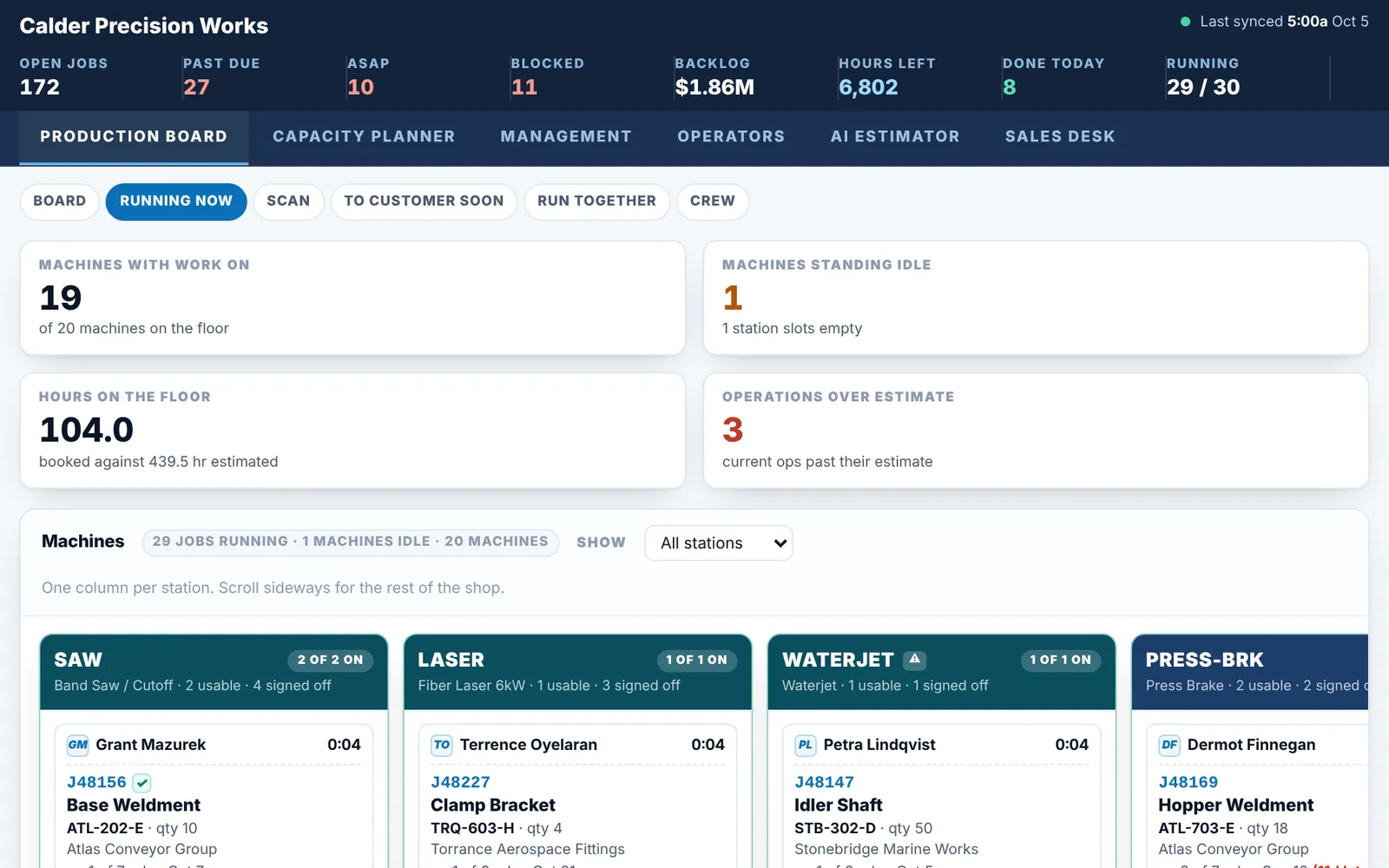
Each operation someone is clocked onto this minute, with hours spent against estimate, plus a crew list with anyone not on a job at the top.
The problem
A job going over its hours was only found after it closed.
Who runs it
Owner, GM / Finance and Shop Foreman. Management tier only.
Used by
OwnersManagement
Operations · Ship more jobs
Where the parts are
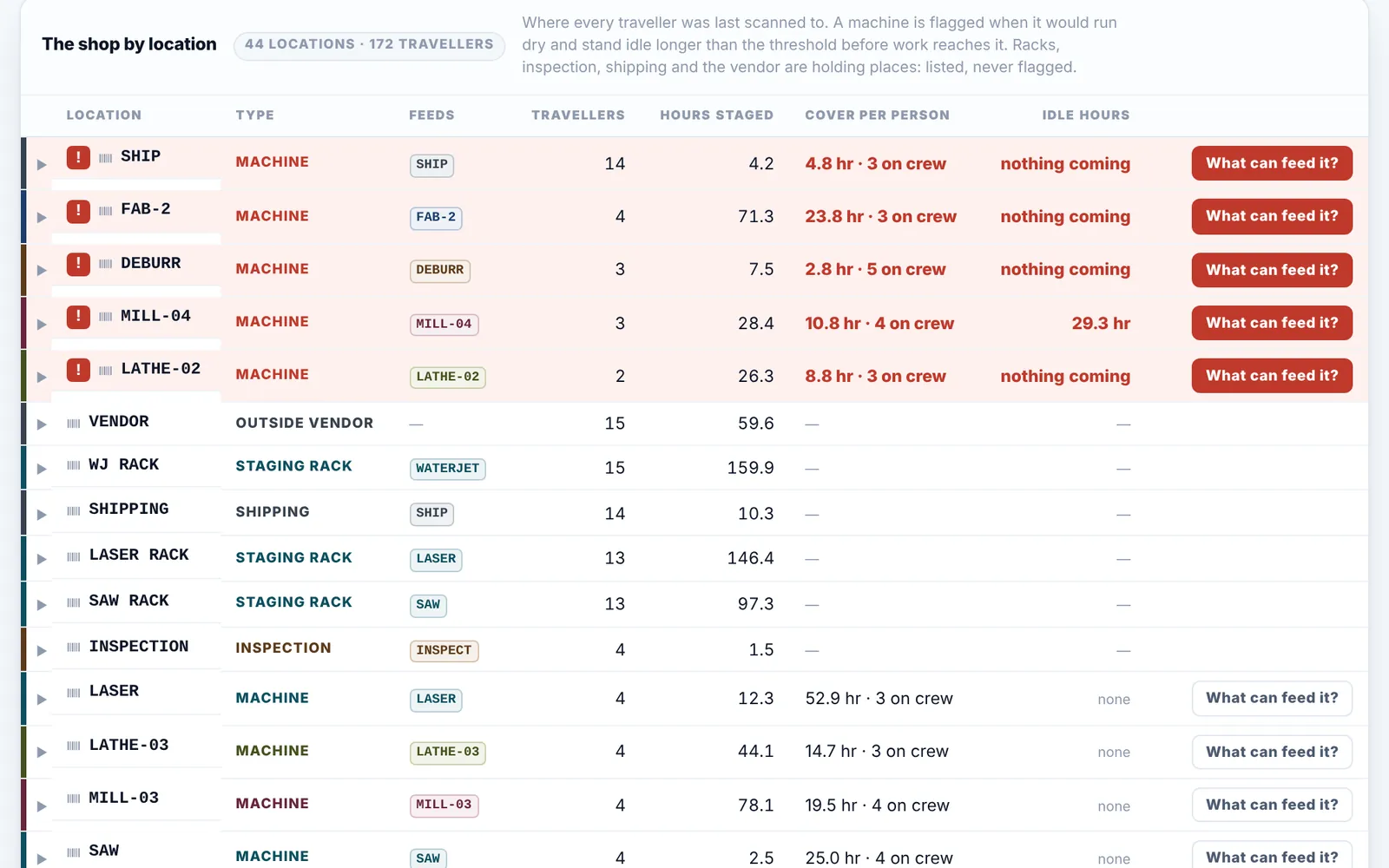
Barcode stations record rack location and who holds each part at the moment work changes hands.
The problem
Travelers and parts could not be found without walking the building.
Who runs it
Shop Foreman. Machinists scan at every handoff.
Used by
SupervisorCrewsDispatch & Inspection
Operations · Ship more jobs
Machines about to run dry
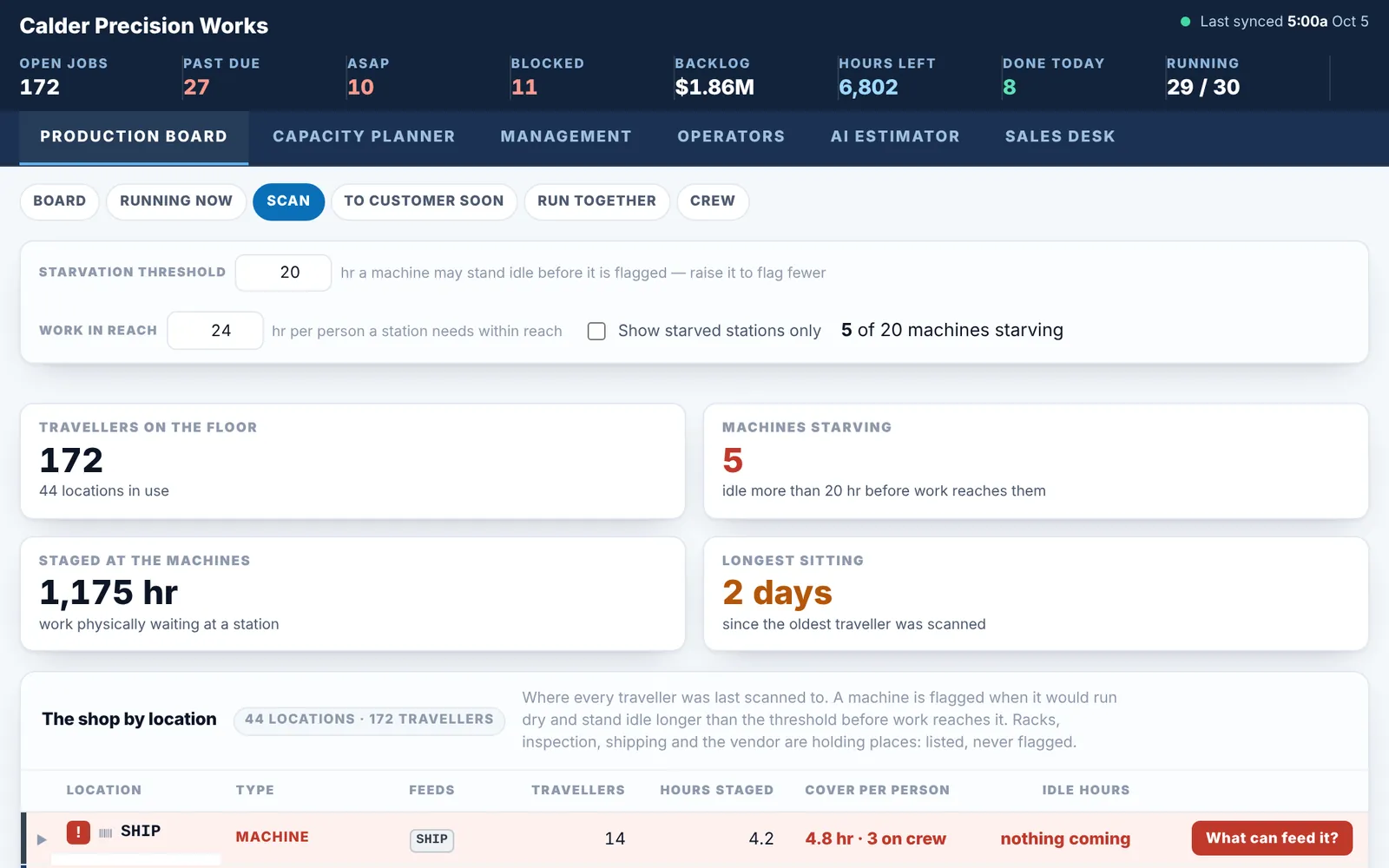
Days of work in hand at each station, crew or truck, against who is actually on shift, with what can be pulled forward.
The problem
Days of work in hand at a machine was unknown until it ran dry.
Who runs it
Owner and GM / Finance. Kept off the foreman to protect his machining time.
Used by
ManagementSupervisor
Operations · Ship more jobs
How full the shop is
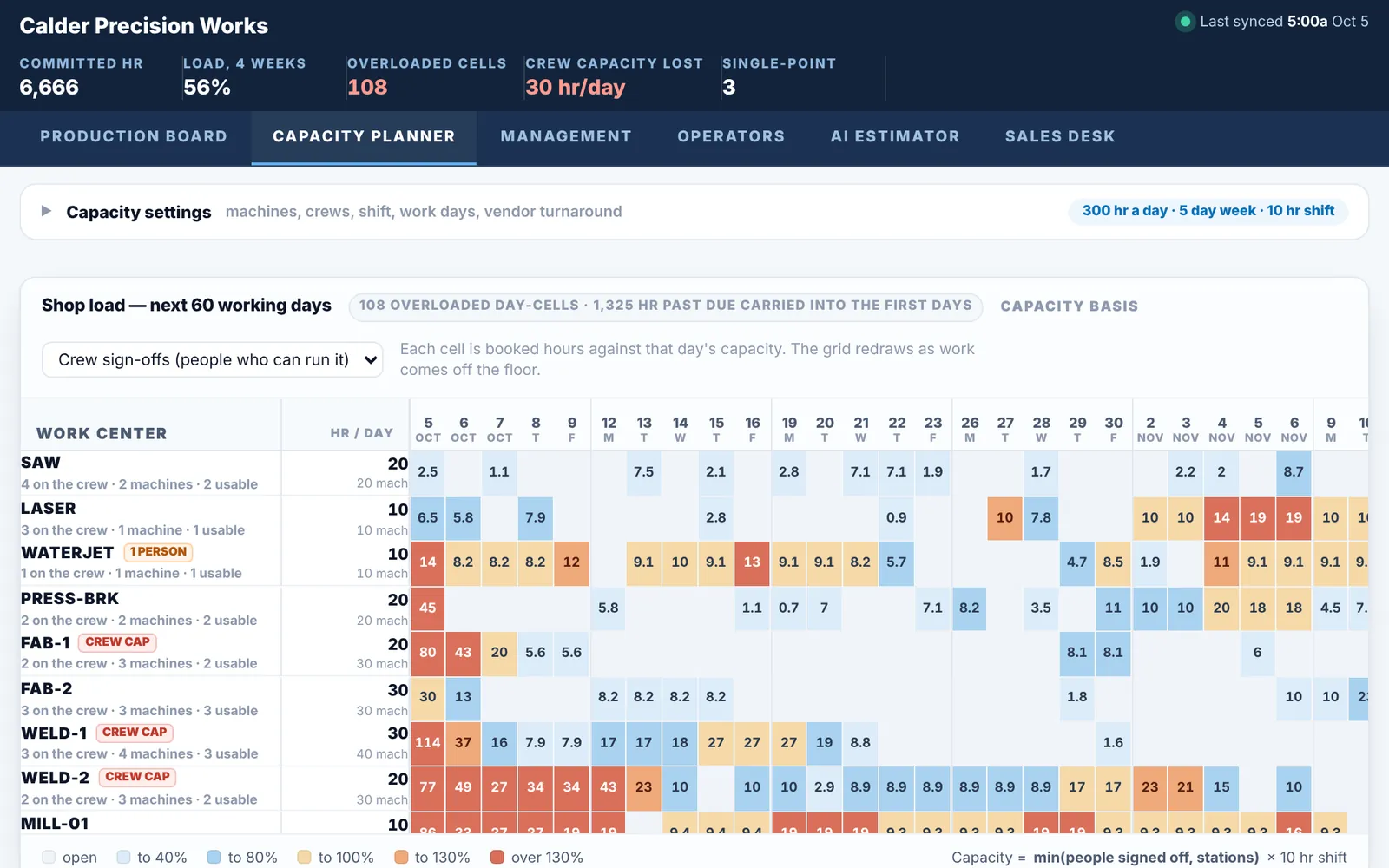
Hours booked against capacity, work center by work center, day by day, recalculated as jobs close.
The problem
One company-wide lead time hid the bottleneck, so nobody knew where the shop was already full.
Who runs it
Owner and Shop Foreman, in the daily load review.
Used by
ManagementSupervisorMaintenance
Sales · Win more work
Lead time you can commit to
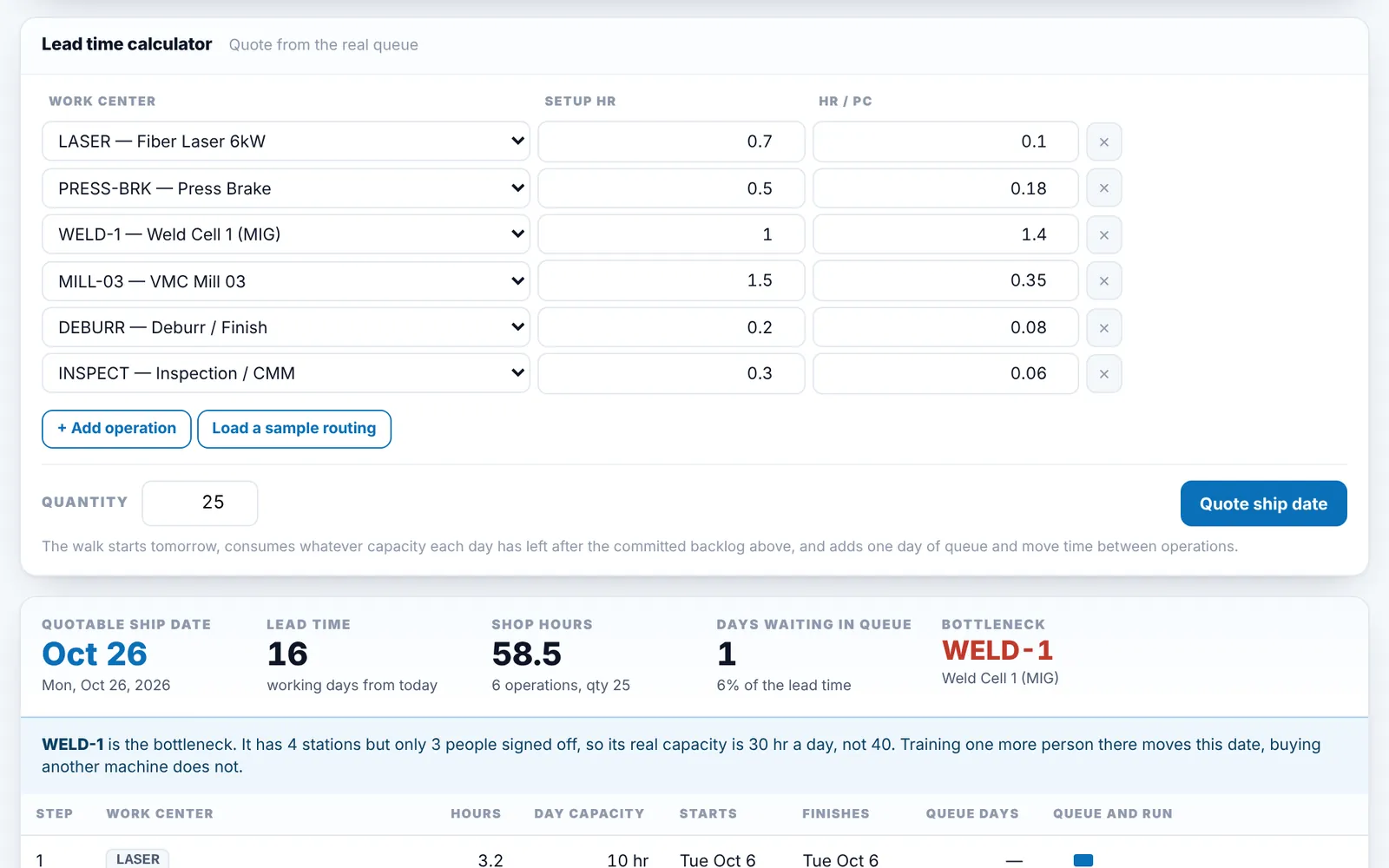
Projects the lead time the customer is asking for, then schedules the work behind it so every machine and every person stays loaded. Capacity is planned instead of found late, so the shop is not idle in one place while running behind in another, and the date quoted is the date the job ships.
The problem
Lead time was a guess, and a date given on instinct was absorbed later by the crew. Machines sat idle in one place while another ran behind.
Who runs it
GM / Finance enters the real schedule. Estimator builds the routing.
Used by
ManagementEstimatingSales
Sales · Win more work
Quotes and leads followed up
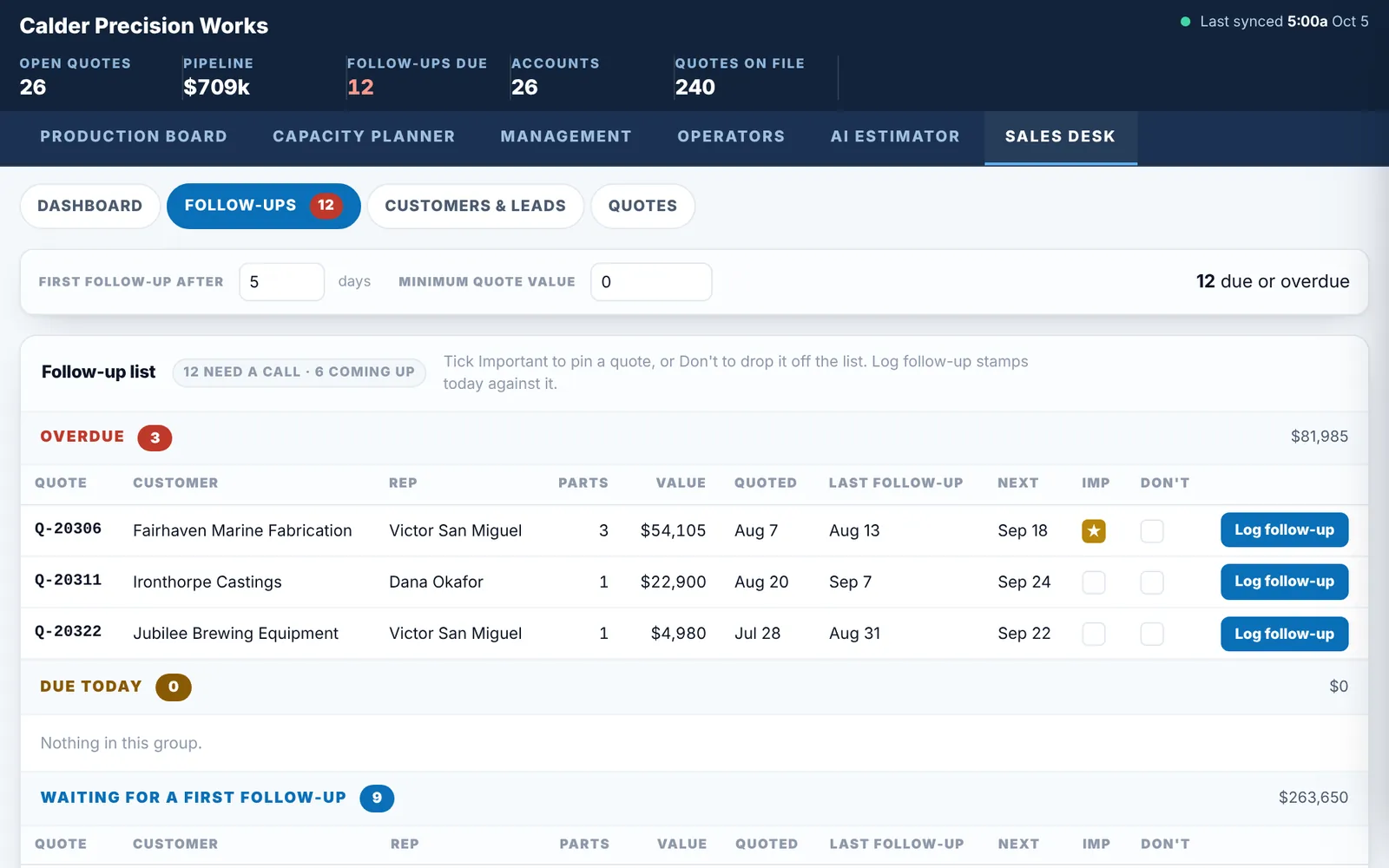
A sales desk built on the quotes already in your system: every open quote with a date for the next follow-up, every lead and customer with who was spoken to and what was said, and a dashboard showing win rate, open pipeline and the reasons work was lost.
The problem
Quotes went quiet after they were sent, and nobody recorded why work was lost.
Who runs it
Business Development Manager owns it. Customer Service works the quote follow-ups.
What it does
Follow-ups: what is overdue, due today and due this week, plus quotes still waiting for a first call, so nothing is dropped.
Quotes: every quote with its value, status and next action, and a recorded reason whenever one is lost.
Customers and leads: contact, title, source and stage, with a running note of every call, email, visit and shop tour.
Dashboard: win rate, quotes out and won, open pipeline, how much got followed up, days to first follow-up, and revenue by customer and by month.
Used by
SalesEstimatingManagementOwners
Finance · Earn more profit
How the business is doing
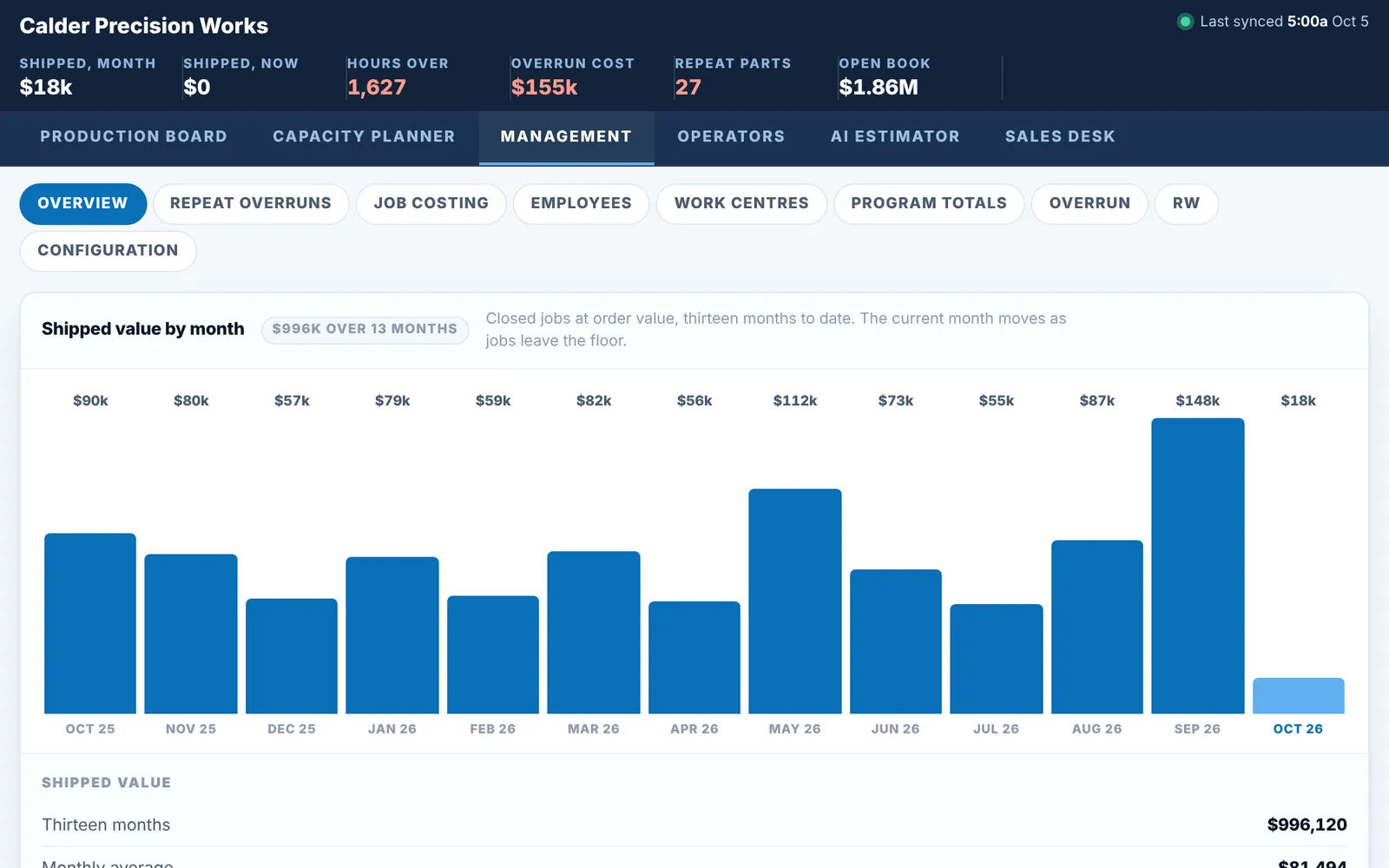
Revenue, estimated against actual, incentive pay and rework, reconciled to the job cost summary.
The problem
Four reports gave four different answers to the same question.
Who runs it
GM / Finance, to a written procedure. Owner reviews.
Used by
OwnersFinanceManagement
Finance · Earn more profit
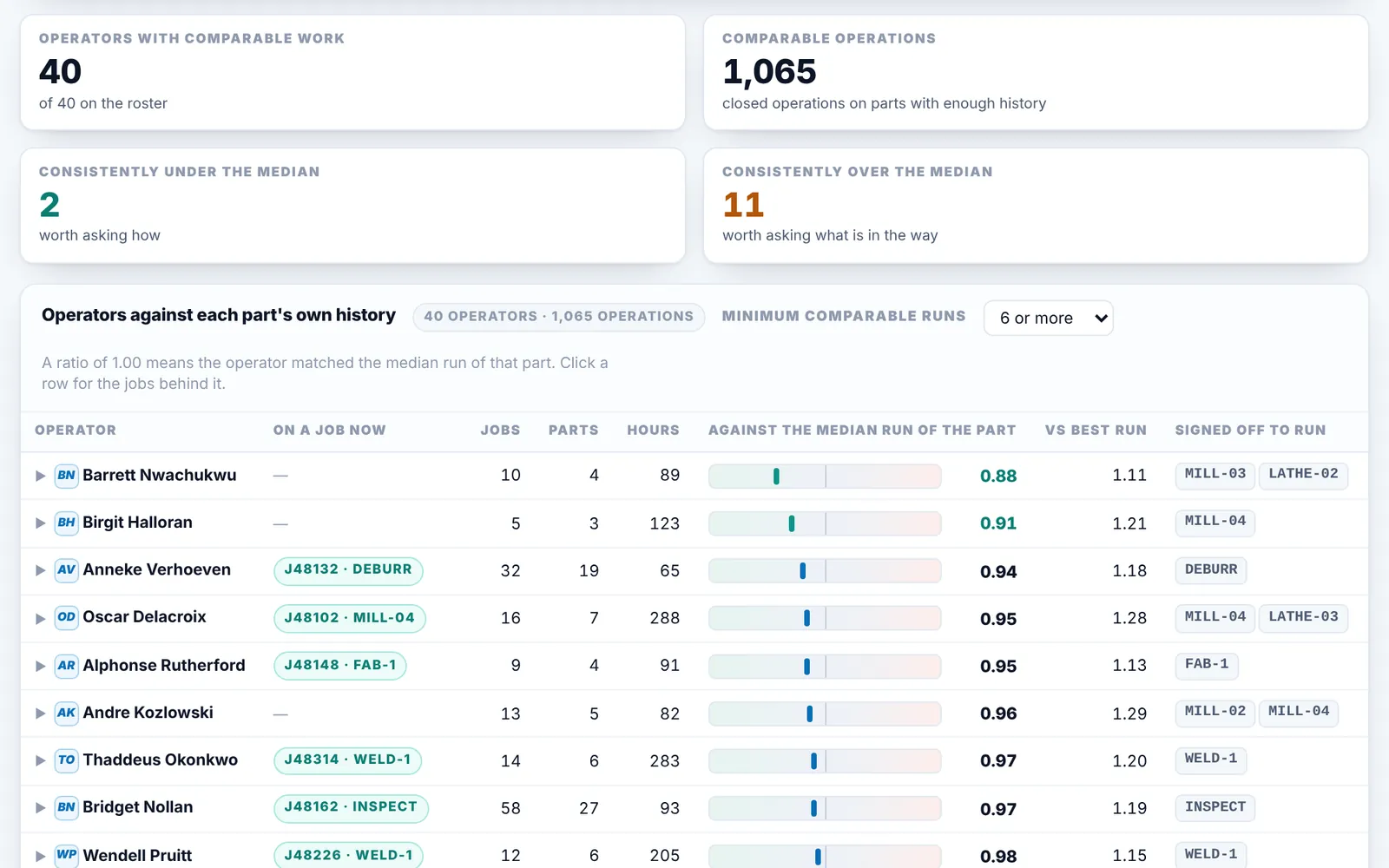
How each person is doing
Each person's hours on repeat work compared with how that same job has run before.
The problem
No productivity tracking, and no defensible way to review anyone.
Who runs it
GM / Finance. Owner reviews.
Used by
OwnersManagementSupervisor
Sales · Win more work
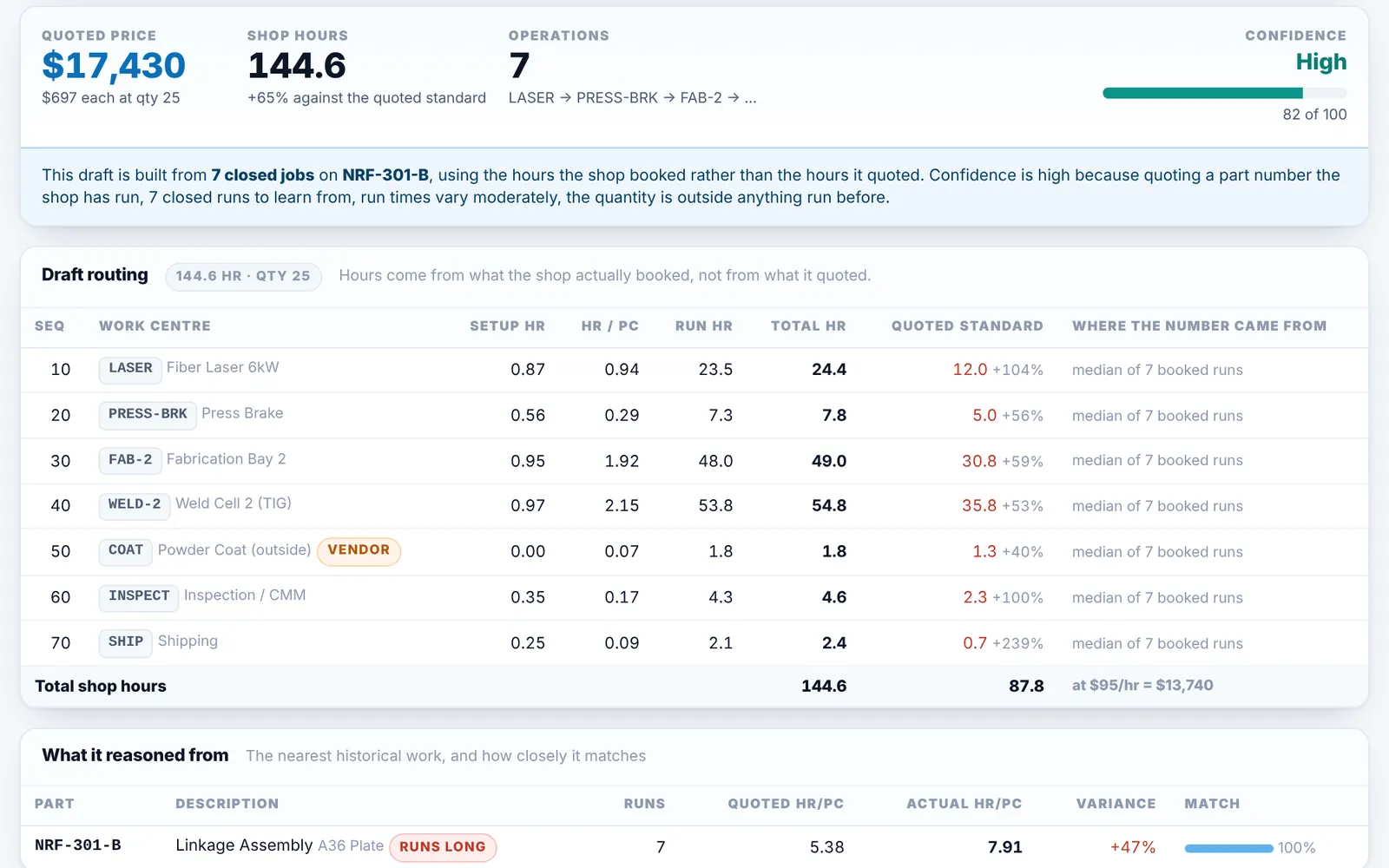
Quoting from the drawing
Reads the drawing or scope and drafts the steps and hours, priced from the business's own won quotes, then validated against held-out jobs before use.
The problem
Quotes took days and depended on a handful of experienced people.
Who runs it
Estimator approves every draft. GM / Finance confirms vendor prices before release.
Used by
EstimatingSales
Finance · Earn more profit
Cash, weeks ahead
A rolling weekly forecast of cash in and out, built from invoices, payment terms, payroll and recurring costs.
The problem
No cash projection. The bank balance was the forecast.
Who runs it
GM / Finance. Owner reviews weekly.
Used by
OwnersFinance
Finance · Earn more profit
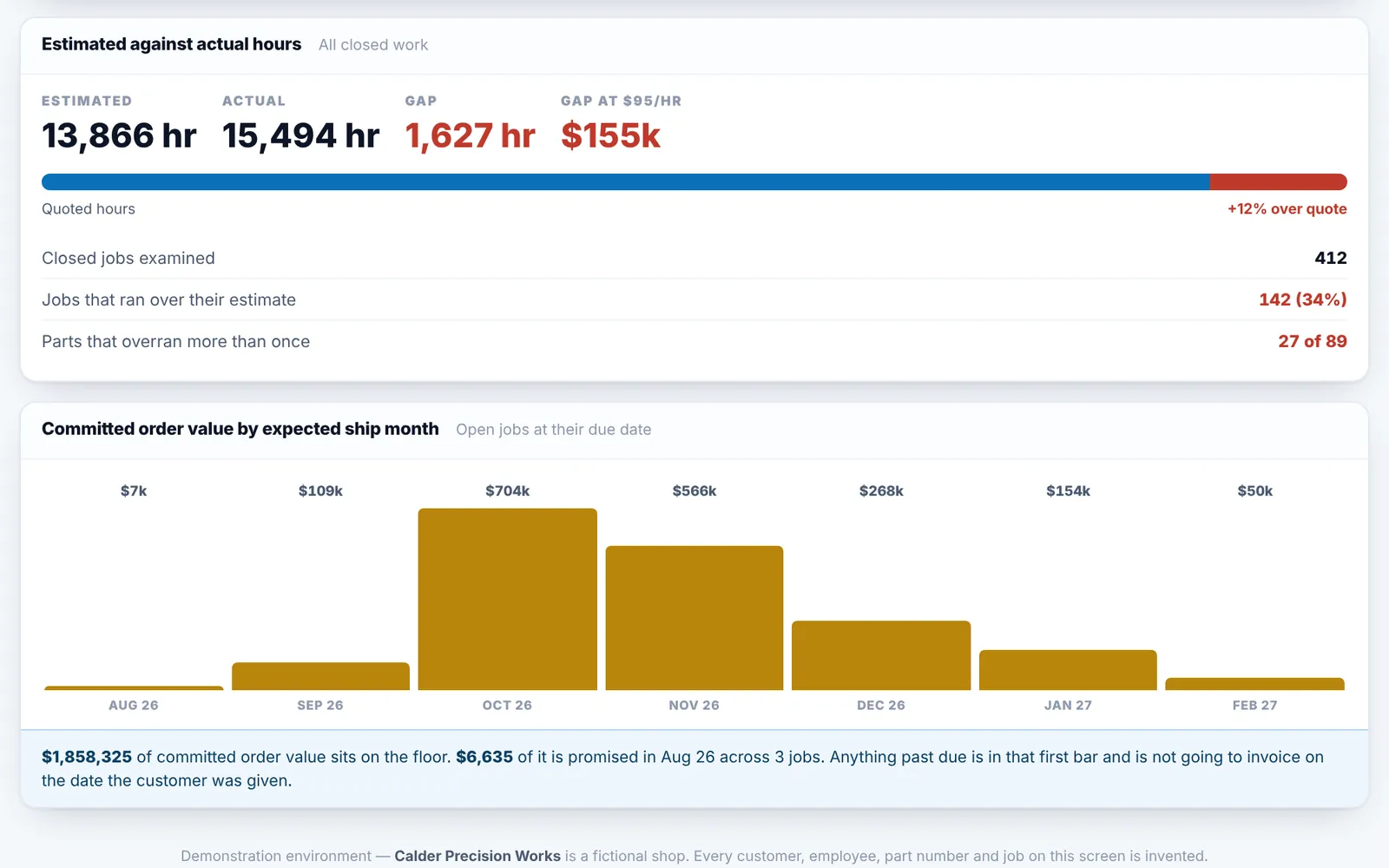
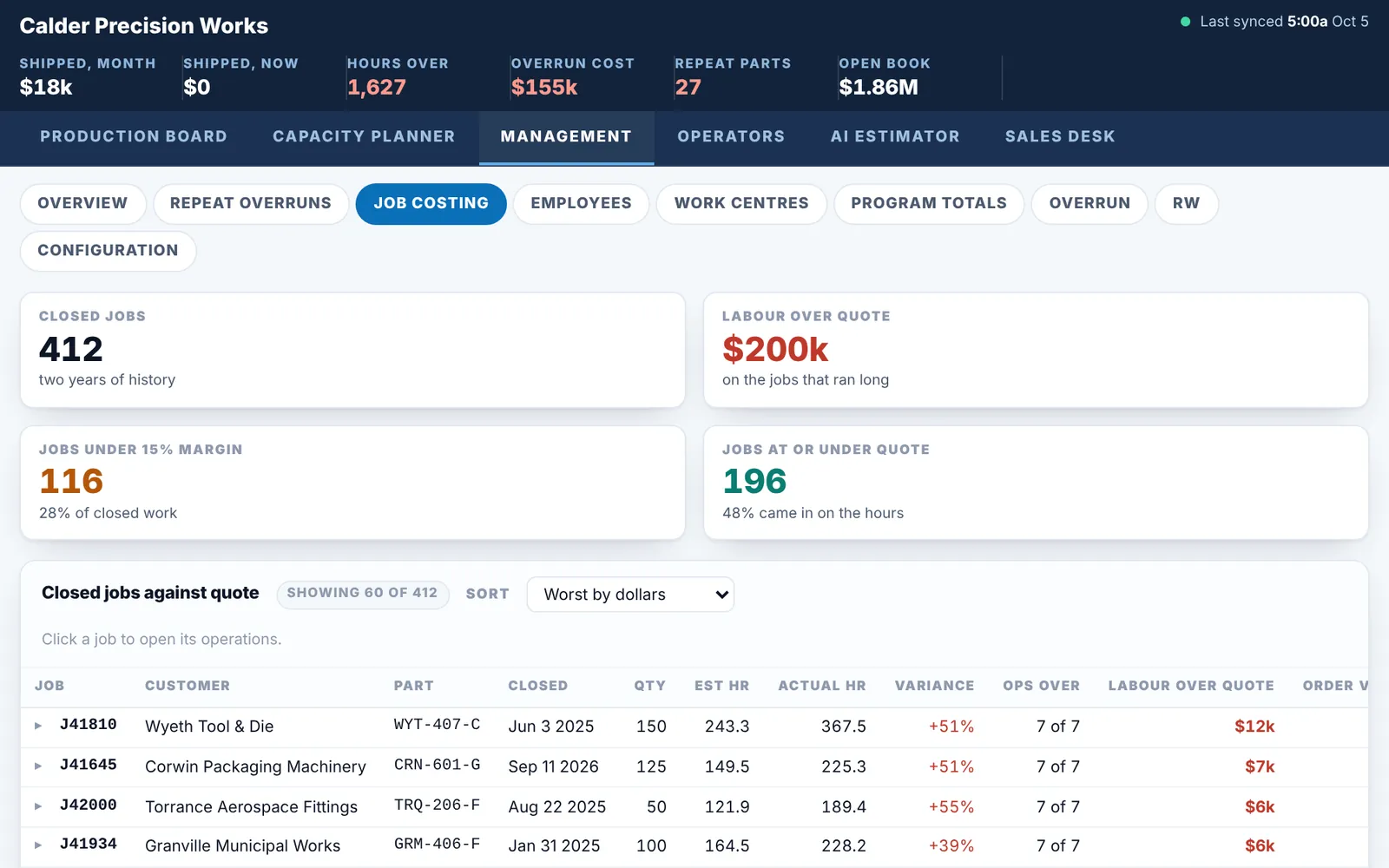
What each job really costs
Cost accumulating against the quote while the job is still running, not after it ships.
The problem
Job cost was known after the job shipped, when nothing could be done about it.
Who runs it
GM / Finance. Owner reviews at the accountability meeting.
Used by
Sales
What it all runs on
The system you already own
The ERP or job system already in place. Read-only access; nothing rewritten or replaced.
The problem
The numbers were already there, scattered where no one could act on them.
Who runs it
IT contact. Read-only throughout.
What it all runs on
Keeps it all current
A small service on the client's own server that reads the ERP on a schedule and feeds the live hub.
The problem
Screens went stale unless somebody exported and re-keyed.
Who runs it
IT contact deploys, to a fixed runbook.
What it all runs on
One live copy
One live copy that every screen reads from, so no two tools can ever disagree.
The problem
Each tool kept its own copy, the copies drifted, and people stopped trusting all of them.
Who runs it
IT contact.
How it is run
Who owns what
Written job descriptions, a named owner for every system, and a daily and monthly review cadence.
The problem
No org chart, no foreman, no reporting line, so tools nobody owned went stale.
Who runs it
Owner. GM / Finance manages board access.
How it is run
Written procedures
Operating and inspection procedures drafted from how the work is actually done.
The problem
The work was done right but never written down.
Who runs it
GM / Finance.
How it is run
Who can see what
Staged sign-in and three access tiers, rolled out without interrupting the work.
The problem
The live database is reachable by anyone with the link. The board login is live; the rules are not started.
Who runs it
IT contact. Open item, not started.
What it all runs on
You own it outright
A paid day on site produces a written plan with a fixed price for each piece. Whatever gets built is owned outright: no license, no per-seat fee, no subscription.
The problem
Per-seat platforms bill more every time another person needs a screen.